See the interactions.
Consider plants, animals, pollinators, soil, water, and labor together. A planting choice changes more than the map.
Value for you: understand tradeoffs before committing. sheduLet’s talk land ↗
Plan your land. Understand the costs. Put the work in motion. Shedu is being built to connect those decisions—and turn what growers learn into better guidance for everyone.
Explore what’s possible ↗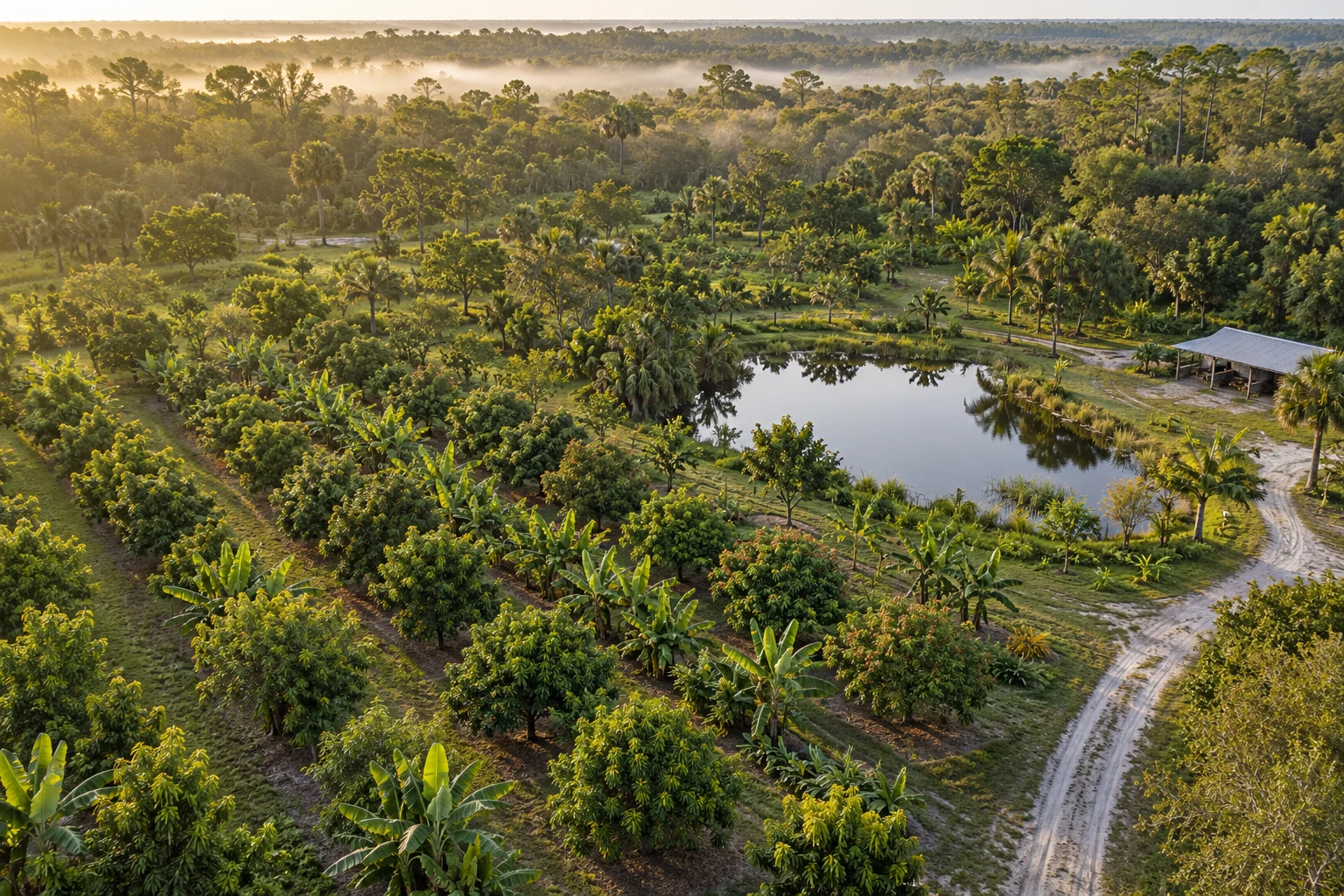
What belongs here? What will it take? And what should happen first?
Shedu is being built to bring soil, water, planting choices, labor, equipment, and money into one working picture. Compare conventional, regenerative, and hybrid approaches against your goals—then develop a plan you can actually manage.
Meet the Shedu protocol ↗Shedu’s intended distinction is a continuous connection between ecological relationships, practical economics, approved fieldwork, and observed results. Each part should inform the next.
Consider plants, animals, pollinators, soil, water, and labor together. A planting choice changes more than the map.
Value for you: understand tradeoffs before committing.Compare conventional, integrated, and hybrid options against capital, time, equipment, ongoing inputs, and risk.
Value for you: a plan that fits your resources.Translate a reviewed recommendation into a work order, seasonal window, budget, and completion checklist.
Value for you: less guesswork between design and doing.Connect what was recommended, what was actually done, and what followed. Review the evidence before updating guidance.
Value for you: advice that can improve with field experience.Useful tools already cover important parts of this work. Shedu’s opportunity is to connect them into a reviewed decision-and-action loop. These examples describe documented strengths, not a claim that competitors lack every other capability.
| Tool | Documented strengths | Shedu’s planned emphasis |
|---|---|---|
| Permapeople ↗ | Free garden layout, guilds and polycultures, backed by a community plant database. | Connect ecological choices to site constraints, budgets, and implementation. |
| GrowVeg ↗ | Garden planning, crop rotation guidance, and a garden journal. | Compare whole-property strategies with labor, equipment, and long-term cost assumptions. |
| farmOS ↗ | Agricultural and ecological records organized around assets, logs, plans, and quantities. | Use reviewed records to inform recommendations and coordinate the next intervention. |
A preview of how your property could become a living plan. Explore the example below.
Move the slider to explore a sample first-phase budget. These fixed allocations demonstrate the interface; they are not quotes, agronomic advice, or a profitability forecast.
A real plan would use site assessment, supplier quotes, labor estimates, maintenance needs, and seasonal risks before you approve work.
Choose a priority to see how a reviewed plan could become a sequence of work. No jobs are booked from this preview.
Product concept in development. All property details and budgets shown are examples, not a live project or measured results.
One connected process, designed to get better with every season.
Bring together your goals, site observations, soil and water information, and the resources you can commit.
Use AI-assisted analysis to explore land-use options, tradeoffs, costs, and the evidence behind each recommendation.
Turn a plan reviewed by people into phased work orders. Approve scope and budgets before coordinating specialists and schedules.
Record costs, labor, photos, plant survival, and harvests. Feed those observations into the next planning decision.
A plan is a starting hypothesis. The value grows when we connect it to what actually happened—and make the useful lessons available to the next grower.
Better decisions,Record the recommendation, its evidence, your starting conditions, and expected costs and effort. Keep the assumptions visible so future results have something meaningful to be compared with.
A grower plans a small mulched planting area, records soil conditions, and estimates watering and maintenance time.
Share by choice. The intended model uses explicit permission for shared observations, keeps identifying property details private, and returns useful lessons to growers.
Learn with context. Compare similar soils, climate, water, scale, and management. Keep scientific findings, field observations, and hypotheses distinct.
Improve with evidence. Review unusual outcomes and test updates before relying on them. More records alone do not prove cause and effect or guarantee better advice.
Over time, the goal is to help landowners and growers across the country make sustainable living more practical: growing food, caring for soil, supporting habitat, and using water and labor thoughtfully. A lesson travels only when its conditions fit. Failures and unexpected costs matter as much as successes.
Free core access can bring more people into the learning loop. Better guidance could make it easier to act, observe, and contribute again—building a shared resource for healthier landscapes and more resilient livelihoods. This national network is a development goal, not a service already available nationwide.
The planned pilot keeps core ecological planning and monitoring free. Growers should be able to explore a direction, understand the reasoning, and track what happens.
In development. Pilot capacity, usage limits, and access terms will be published before enrollment. Post-pilot pricing has not been set.
Discuss the pilot ↗On-site assessments, specialist consultation, testing, materials, installation, and contractor labor are separate costs.
No published subscription price or contractor fee schedule yet. Any paid work requires a separate quote and your approval.
We plan to test paid implementation support and professional tools as ways to fund the core service. The model must prove useful to growers before it scales.
Shedu is an early-stage business based in North Carolina, developing a pilot program in Southwest Florida.
We’re looking to learn with landowners and growers who want a practical way to connect ecological goals with the everyday work of managing land.
Start with a conversation about your property and priorities. Core planning and monitoring are intended to be free during the pilot; any specialist support or fieldwork would be scoped and quoted separately.
Tell us about your land ↗Shedu is in development. The workspace above illustrates the intended experience. We’re inviting conversations about the pilot; it is not a self-service planning or booking platform yet.
The planned pilot includes free core ecological planning and monitoring. Specialist advice, site assessments, testing, materials, and fieldwork are separate. Future pricing will be informed by the pilot; no paid service is booked through this preview.
No. The intended learning network will ask for explicit permission to use observations beyond your own plan and protect identifying property information. Detailed contribution terms and controls will be established before shared field data is collected.
No. The approach starts with your goals and constraints. Conventional methods, integrated permaculture, and hybrid agroforestry can all be considered where they fit the land and its economics.
No. The intended role of AI is to help organize evidence, compare options, and prepare plans. Site conditions and recommendations require human review, and you approve commitments.
A description of your property, what you want to achieve, current land use, available resources, and your main challenges. We can discuss which soil, water, or site assessments would be needed next.
Tell us what you’re working with—and what you’d like it to become.
Start a conversation ↗scott@shedu.io